Category Archives: music

Less Than Jake, Bouncing Souls – UK Winter Circus 2026 (review)

Less Than Jake are one of the ‘bucket list’ bands I promised myself I would go and see if I ever had the chance. It took long enough, but the stars finally aligned and I snagged tickets for the opening night of their 2026 UK trek at Bristol Prospect Building, one of the newest venues in a city awash with venues. It’s getting increasingly common, especially with US bands, to tour as part of stacked line-ups. In the age of spiralling costs, it’s probably the only sure-fire way to get some bums on seats. The UK Winter Circus is a perfect example, and beneath LTJ in the headline slot we have The Bouncing Souls, The Aquabats, and Bar Stool Preachers, four bands that despite representing different sub-genres complement each other perfectly.

Brighton punks-with-a-conscience Bar Stool Preachers kicked things off, and did so superbly albeit with a heavily truncated set (the downside of playing first on a 4-band bill with a strict curfew). Since 2016 they have steadily built up an impressive catalogue, and though in the modern age it’s difficult to gauge how popular they are their last album (Above the Static) made a small dent in the charts and the track Choose My Friends has surpassed 1.5 million streams. That must have earned them at least a quid. With all the infectious energy and enthusiasm of Massive Wagons or peak Wildhearts, and you can’t help but develop a soft spot for the Bar Stool Preachers. They do things the right way, seem like a solid bunch of guys, and have some good tunes in the bank with the biggest cheer of the night (to that point) reserved for their namesake anthem.

The Aquabats have always been an enigma to me. They’ve popped up on a few bills I have seen over the years, and though I appreciate their self-deprecating shtick I just don’t get the superhero alter ego thing. I will forever be mentally scarred by the image of a drunk mostly naked Aquadet squirming around on a toilet floor. Apparently, he hadn’t accounted for his superhero costume not having a zip in the front. He had to take the whole shebang off to go pee pee, and then fell over and couldn’t get up. I bet he was glad of the goggles. I’d love to tell you more about their set, but the truth is I swerved most of it in favour of the bar. But I will say they were much better than I previously gave them credit for, even accounting for the wholly unreasonable amount of inflatable sharks (they might have been dolphins).

I am a massive Bouncing Souls fan, and have been since I first heard Gone in around 2004. I have navigated a lot since then, and BS have been with me every step of the way so they are as big a draw for me as LTJ. They are one of those bands who I just connect with, and I can’t even explain why. As with most cult bands, you find that BS fans are real fans. There may not be many of them, but they sing every line in every song and I haven’t seen a pit go off like that since, well, ever. They played a mammoth 17-song set, unusual for a support band, heavily weighted toward their older material and kicking off with Manthem from 2001’s How I Spent my Summer Vacation album. The Gold Song, Kate is Great, Lean on Sheena, and That Something Special followed before Greg Attonito even paused for breath. The set was missing a few of my personal faves (Apartment 5F, Serenity, So Jersey, Ghosts on the Boardwalk, Coin Toss Girl) but you can’t have everything. Rumour has it a new album is imminent, their first new music since 2023, and it was (probably) represented here with a new song, the name of which eluded me. After hitting a peak with Hopeless Romantic and True Believers, two stone cold classics, the last song was Gone, of course it was. And then they were. BS, we love you. Headline tour, please. And we will sing along forever. Oi!

All this, three bands, three hours, and thirty-odd songs, was to prepare us for the ska skate pop punk royalty that is Less Than Jake. I must admit I swooned a little bit upon seeing Roger Lima in the flesh. What a ledge. The high-octane set kicked off with a couple of cuts from 1998’s Hello Rockview (Nervous in the Alley and History of a Boring Town) before being brought (mostly) up to date with High Cost of Low Living, a standout track from their most recent full album Silver Linings. The classics kept on coming; All my Friends are Metalheads, Johnny Quest Thinks we’re Sellouts, Walking Pipebomb, as the night moved toward a crescendo. The set mined so many old standards that they seemed almost apologetic when they played a new(er) song. The one they chose, though, Sunny Side Up from the Uncharted EP, is an absolute banger. Special mention should go to to Buddy Goldfinger. When he put his trombone down, which was often, he would just frolic and pogo about fulfilling a kind of Bez from the Happy Mondays role, minus the maracas. Wales got a shout out, which was unusual considering the gig was in England, but it made more sense when Chris DeMakes told the story of how, on their first visit to the UK, they strode out in Cardiff and said “Hello, England!”

Some of the stage banter was hilarious. Lima and DeMakes should start a comedy podcast together (“It’s good to see so many people here! In America we couldn’t sell out a phone booth”). The set was closed out with The Brightest Bulb has Burned Out, Look What Happened, and Gainsville Rock City. The band, collectively and as individuals were bang on point. What a fantastic gig this was.

The tour continues.


Bruce Blogs #5 – Born to Run @ 50.

I thought after my rant against Tracks II a while back, I should redress the balance by writing something to celebrate one of the greatest albums ever made hitting fifty. Yes, fifty. That’s fifty years. Bruce Springsteen’s seminal third album was released worldwide on 25 August 1975, and to celebrate the auspicious occasion I have been spinning it a lot this week. Or whatever the correct terminology is when applied to MP3 files. It’s not my favourite album by any means. It’s not even my favourite Bruce album (that honour will always go to Darkness on the Edge of Town). But Born to Run is undeniably brilliant. From start to finish it’s a journey, evoking cinematic landscapes signposted by teen angst, lost love, gang violence, and above all, that sense of frustration and crushing isolation that so often haunts people from small towns. At its core, it’s an album of hope and inspiration, which may help explain why it resonated so widely and with so many.

In hindsight, this album was Springsteen’s sliding doors moment. Having been signed by Columbia Records as a Bob Dylan clone in 1972, his first pair of albums (Greetings from Asbury Park, and The Wild, the Innocent, & The E Street Shuffle) didn’t exactly set the world alight. With the record company expecting a return on their investment, this third effort probably represented his last shot at stardom. And he knew it. Born to Run took 14 months to record, which was practically unheard of in the Seventies when most major label artists were putting out two albums a year. The title track alone reputedly took six months to perfect, with the Boss famously complaining that he heard sounds in his head that he couldn’t replicate in the studio. It was produced by Springsteen himself, aided by current manager Mike Appel and future manager Jon Landau, who tied themselves (and each other) in knots trying to capture something akin to Phil Spector’s legendary ‘Wall of Sound.’ The tensions led to a lot of soul searching, some very awkward conversations, and ultimately several departures with David Sancious and Ernest Carter being replaced in the E Street band by Roy Bittan and Mighty Max Weinberg on piano and drums respectively. Appel himself would soon be on the way out himself, which led to a lengthy legal battle which finally ended with Springsteen buying himself out of his own contract.

So what about the music? Well, you should already know all about that but if you don’t, here we go. Eight tracks totalling just shy of forty minutes kicking off with Thunder Road, one of the most recognisable songs in the Springsteen arsenal. With it’s haunting harmonica and piano, it’s a slightly understated introduction, before the balance is redressed with the punchy one-two combo of Tenth Avenue Freeze Out and Night. The ‘wall of sound’ production is already in evidence, but really comes into its own with the climax of the epic Backstreets which rounds out side one of the vinyl and cassette. I mention this because more than one critic has pointed out how vital the sequencing was, with its ‘four corners’ approach meaning each side of the recording starts on an uplifting, optimistic tone before sinking into lyrical drudgery and fraught pessimism, with lyrics touching on fear, betrayal, revenge, and violence. This concept is never more evident than when ‘side two’ kicks off with the immortal Born to Run, which perfectly encapsulates that sense of missing out that we all felt as teenagers, the unshakable belief that everything was happening somewhere else and all you had to do was get there. This is followed by She’s the One, a song about romantic obsession, and the album closes with Meeting Across the River and the immortal Jungleland, two similarly-themed tracks about the darker side of the American Dream with the latter weighing in at over nine minutes and featuring a timeless extended sax solo from Clarence Clemons.

Though not officially a concept album, it has been said many times that Born to Run has a very cinematic feel, with each track hitting like a mini opera, or a vignette attached to a broader work. Several critics have pointed out that the album is driven by actions, such as running, meeting, hiding and riving. These characters are in perpetual motion, if not literally then figuratively. It is indeed a journey for the listener from start to finish, the road possessing the ability to ‘take you anywhere’ and therefore offering a means of escape. There is a feeling that the highway offers a sense of hope or even belonging, and it becomes a metaphor for everything missing in the narrator’s life. Springsteen himself has said that it was all well and good packing all these characters in their cars and sending them off to chase their dreams, but then he had to figure out what happened to them all. Leaving was the beginning of the story, not the end. Interestingly, over the years another school of thought has emerged suggesting that the road described on Born to Run constitutes an antidote to the politically-charged climate it was released into typified by assassinations and the Vietnam War, which ultimately represented an escape from the American Dream rather than way to attain it.

The numbers leave little to the imagination. Released on 25 August 1975, BTR peaked at number 3 on the Billboard charts, back when it meant something, and by the end of the year had sold upwards of 700,000 copies. In 2022 it was certified seven-times platinum by the RIAA in the US and had sold 10 million copies worldwide. These days you can find it on ‘best album’ lists everywhere and Springsteen’s set lists are invariably studded with representatives, probably more-so than any of his other albums. Upon release, it received almost universal acclaim with Rolling Stone magazine commenting that, “Springsteen enhances romanticized American themes with his majestic sound, ideal style of rock and roll, evocative lyrics, and an impassioned delivery,” and the New York Times calling it a ‘masterpiece’ of punk poetry and one of the great records of recent years. Perhaps more pertinently in the grand scheme of things, it also marked the transition from Springsteen’s folk-inspired origins to global rock superstar, which now seems obvious but at the time didn’t please everybody, especially folkie types already scarred by Bob Dylan’s defection a decade earlier. But as anyone can see, rock n’ roll was always the Boss’s true calling and tramps like us, baby we were born to run.


Bruce Blogs #4: Why I won’t be buying Tracks II

When Bruce Springsteen released the first Tracks in late 1998, it was just what fans had been waiting for. A four-disc boxed set consisting of 66 b-sides, outtakes, demos, and unreleased songs charting an alternative map of his career from 1972 up to 1995. If memory serves, I think it cost just under £40. According to the Bank of England’s inflation calculator, this would be roughly £75 today. Since then, those archives have been further raided for various other projects, such as the bonus disc of rarities accompanying the Essential Bruce Springsteen in 2003 and The Promise double album in 2010. All this makes me believe that anything worthwhile would have been released by now.

Before I go any further, I should probably reiterate what a huge Springsteen fan I am, and have been for almost four decades. I have bought literally every official release, some unofficial releases, been to see him all over the world, most recently in Birmingham and Cardiff, and even made a pilgrimage to Asbury Park, New Jersey in 1999. His music has provided the soundtrack to my life. For me he peaked with Born to Run and Darkness on the Edge of Town, but for the most part his recorded output has been of a consistently high standard. He has made a few mis-steps, though. Springsteen himself has alluded to making several albums in the nineties that were so bad he could barely listen to them. The Human Touch and Lucky Town albums, two of the few officially released during that decade, are generally considered to be among his less adored, shall we say. Nothing that drew as much ire as the Great Ticketmaster Fiasco of 2022 when ‘dynamic pricing’ saw tickets being sold for thousands of dollars and loyal fans being ripped off left, right, and centre. Of course, The Boss denied all knowledge. It wasn’t as if he needed the money, having sold his entire catalogue to Sony the year before for a reported half a billion dollars.

Which brings me to my issue with Tracks II: The Lost Albums, released this week. And no, it’s nothing to do with his recent poliItical posturing, it’s the sheer cost of the thing. The 83 tracks come spread over either seven CDs for £229.99 or nine vinyl discs retailing at £279.99. That’s a decent chunk or change. It means each CD is being sold at £32.85, and each album at £31.11. Can you imagine the public outcry if Springsteen, or anyone else, tried charging those prices for standard commercial releases? According to Google’s handy AI overview, in 2023 the average cost of a CD in the UK was £10.21 and a vinyl album £26.01. And when dealing with boxed sets, this average price is often driven down because you aren’t just buying a single disc, but multiple units. What makes Bruce, or his record label (Columbia, now owned by Sony), think these songs, which haven’t been deemed good enough for release until now, are worth so much more? I’m sceptical. And I know he might not be personally responsible for the pricing, but I refuse to believe he has no say whatsoever.

I’m not buying it. Neither figuratively or literally. This whole thing stinks. I could stomach paying over the odds for concert tickets, and even being asked to shell out for album after album of patchy material. But this is a bridge too far. Yes, there is the option of buying a condensed single CD or double vinyl version (Lost and Found: Selections from the Lost Albums) for completistst and fans that don’t (or can’t) part with that amount of money, mirroring the 18 Tracks collection of 1999. But even that is overpriced, comparatively speaking (£12.99 for the CD and £37.99 for a double vinyl) and 18 Tracks came with three tracks not included on the boxed set. That in itself was construed by many as a cynical move as in the days before streaming and selective downloading, it was purely designed to make fans fork out for a whole album’s worth of material when all they really wanted were the three ‘new’ tracks. The thing I’m struggling most to reconcile here is the fact that the working class hero, man of the people image Springsteen has spent a career nurturing, is in danger of crumbling to dust. If it ever really existed. He has already announced plans for a Tracks III – something else I probably won’t be buying – and let’s not forget this release comes just prior to yet another presumably not insignificant payday with the biopic Deliver Me From Nowhere scheduled to hit screens this year. And he’s on the road again. Those bucks just keep rolling in.

Some titles here will already be familiar to many having previously been released in some form or other; Follow that Dream, County Fair, Johnny Bye Bye, My Hometown, Shut out the Light, Secret Garden. Plus, there are a few more with titles so bland and generic you feel tired of them even before you’ve heard them. How excited can we get about a collection of outtakes of outtakes of outtakes? Most of us are still recovering from his cover of Do I love You (Indeed I do). This feels exploitative. Like a barely disguised cash grab. If in doubt, just look at that cover art. What art, I hear you say. No effort has been made whatsoever. That’s exactly my point.

I fear Bruce, as much as I love the guy, might have gone to the well too many times and perhaps these ‘lost’ albums should have stayed lost.


Manic Street Preachers – Critical Thinking (review)

The Manic Street Preachers are one of those bands whose music may resonate more at some times than others, but have remained one of the few constants in my life. They started strong back in the early nineties with Generation Terrorists, and were an integral part of the swaggering Cool Cymru scene that truly put Wales on the pop culture map. Since that glorious heyday, the quality of material they’ve put out has varied wildly and apart from the odd banger, they haven’t bothered the charts much. Apart from a brief period in the late nineties, they have generally been on the periphery of the mainstream, in that adjacent space they carved out for themselves so deliberately where they are free to offer off-centre political comment and their unique brand of Pound Shop philosophy, but largely unencumbered by commercial pressures. Through it all they have managed to maintain a sizeable cult following, so like a lot of so-called heritage acts still releasing new material (most of them don’t) now try to cater for the fanbase by being the versions of themselves they think most people want them to be. Sometimes it’s comforting, sometimes it’s passable, and sometimes its borderline embarrassing and they come across like a parody of themselves. Coming immediately after reissues of earlier albums Know Your Enemy and Lifeblood, in interviews the band have alluded to this album being a hybrid of those two endeavours. Perhaps as a consequence of being forced to retrace their steps so often, introspection is never far away in the life of the Manics, circa 2025.

Critical Thinking is filled with every Manic-ism you can think of, and more besides. The soaring choruses, the sloganeering, the lyrics concerning obscure painters and war photographers perpetually wavering between defiant and morose, the odd plinky plonky piano. Seasoned bands are generally less experimental these days, and just give the fans what they want. Times ten. Or in this case, times twelve as that’s how many tracks it contains. In doing so, they climb a few rungs on the fame and riches ladder because their popularity goes up a few notches. “Albums are a reflection of where your mind is at – certainly in the Manics’ world,” Nicky Wire told NME just prior to the release of this album, before defining ‘critical thinking’ as the power to reject by not always going with the flow. This ingrained non-compliance has been a near-constant theme in the Manics’ work for decades now, to such an extent that it has become a trait in itself. Each of their albums feature a quote, chosen by the band, which aims to add context to the overall project. This time it’s ‘I am a collection of dismantled almosts’, by US poet Anne Sexton who often addressed mental health in her writing before committing suicide at the age of just 45. In clarification, Wire says “If everyone had the same amazing fucking benefits I had when I was growing up – the music that was around, the parents that I wish everyone could have – it wasn’t anything other than working class but it was just so culturally-enriched. It’s all about critical thinking – trying to re-evaluate who you are and why you like those things.”

That might not be in line with everyone’s interpretation of the phrase ‘critical thinking’ but ‘everyone’ doesn’t matter. This, the band’s fifteenth studio album, comes four years after their last, the Ultra Vivid Lament became their first UK number one since This is My Truth, Tell me Yours topped the charts way back in 1998. The most memorable thing about that particular release was that it wasn’t very memorable. Here, we are dropped right in the middle of some kind of Clash/Dead Kennedy’s mash-up with Nicky Wire’s sweary, deadpan, spoken word delivery layered over the top. This might be what would happen if New Order covered Blur’s Park Life. It’s an intense, and slightly weird start, which, thankfully, acts as a hors d’oeuvre. It isn’t long before the album’s jewel, recent single Decline and Fall, spills forth, the sweeping tones and anthemic chorus bringing to mind peak Manics. That early highlight is quickly followed by another, Brushstrokes of Reunion, written by James Dean Bradfield about an oil painting by his now-deceased mother, and the emotive power it still maintains over him. Moving stuff. These two tracks alone exemplify everything that is great about this little group of survivors from Blackwood.

Next up is Hiding in Plain Sight, a perfect example of one of those jaunty little numbers with paradoxically depressing and mournful lyrics the Manics do so well. This track works as a fitting couplet with People Ruin Paintings, which will invariably sound suspiciously like something else you’ve heard but can’t quite put your finger on. Not that there is anything wrong with that. I think it’s called ‘paying homage’ and Oasis have made a career out of it. The track Dear Stephen was ostensibly inspired by a postcard sent to Wire as a teen from Morrissey at the request of his mother after he was too ill to attend a Smiths gig, and a sleeper hit here (were it not for the subject matter) might be Being Baptised. Elsewhere, Out of Time Revival sounds like classic late-period Police with maybe a hint of Talking Heads, while album closer OneManMilitia is defined by a breezy, country-tinged guitar solo.

You’ll find influences laid bare throughout the album, something the Manics have never shied away from. They have always been a product of their environment. But Critical Thinking is a remarkably consistent effort, especially after repeated listens. The quality doesn’t drop much throughout, even if it gets slightly repetitive towards the end and you find yourself yearning for a You Love Us or a Stay Beautiful to shake things up a bit. Nope. You should be so lucky. Instead, it’s all a bit polished and safe. No doubt, it will please the diehards. Hell, it even pleased me for a while and I’m not even a diehard. As ever, there is some exceptional lyricism on display veering between insightful and profound. One of my favourite lines comes from Late Day Peaks; “There’s no shame in a smaller world, become an expert in what you observe.”

One thing about album-making the Manics (and most other artists) have adapted to over the years is brevity. Albums in general now tend to be tighter, more focused, and shorter. Unless you’re Taylor Swift, of course. Mercifully, bloated 72-minute albums full of spaced-out, mid-tempo plodders, are a thing of the past. The record-buying (or, more accurately, music-consuming) public just don’t have time for it. With Critical Thinking it sounds like the Manics have finally got the balance right, and they just might deliver gold.

Critical Thinking is out now on Columbia Records


Fish @ Bristol Beacon, 26/02/25

Early Marillion made music that had the power to transport you somewhere else, and the albums Misplaced Childhood (1985) and Clutching at Straws (1987) still stand as two of the best of all time, the music itself perfectly complemented by Mark Wilkinson’s Jester art which was an integral part of the overall project in much the same way Eddie is a part of Iron Maiden’s legacy. However, after the live album The Thieving Magpie (1988) frontman Fish parted company with the rest of the band acrimoniously. Both entities continued to put out new music, some of it pretty good, but neither would ever come close to hitting the creative and commercial heights they scaled when they combined their powers. This is being billed as Fish’s farewell tour, dubbed The Road to the Isles, before he decamps to the Outer Hebrides to live out his retirement. “The UK nights are going to be awesome indeed with every venue holding something unique and promising so much for everyone both on and off stage,” he recently after a run of European dates. “To be retiring on this wave is a wonderful feeling and I cannot adequately express how much this all means to me after over 40 years in the music business performing on stages across the world.”

In other pre-tour interviews, Fish vowed to switch up the set-list on a regular basis to keep things fresh. After all, he has a catalogue of eleven solo albums to cover, not including compilations, live albums, or the four he recorded with Marillion. Therefore, it was no great surprise when the show kicked off with Vigil, the very first track from his very first solo album, which segued neatly into Credo, the ‘big single’ from his second album, Internal Exile. From there, things got a bit more unpredictable. I thought his final studio album, 2020’s Weltschmerz (German for ‘world weariness’), would be well represented, but that didn’t turn out to be the case. In face, I don’t think he performed a single track from it, which was just plain weird. Instead, after an animated Big Wedge, Shadowplay, Cliche, A Feast of Consequences, and a stunning Just Good Friends, came the first big surprise of the night – the Marillion standard Incubus from the Fugazi album, which Fish wrote the lyrics for as he did most of the old Marillion material. It was a strange choice. I thought if he was going to play anything from this period it would be Script for a Jester’s Tear, or maybe one of the singles. The bulk of the remaining set was taken up by a near-30 minute rendition of the Plague of Ghosts suit of songs from 1999’s Raingods and Zippos album. That “make it happen” refrain always reminds me of Oasis, but that’s hardly Fish’s fault. If anything, we can blame the Gallagher brothers for that.

The main encore kicked off with A Gentleman’s Excuse Me, another cut from his debut solo album. Given this is his retirement tour, the lines “Can you get it inside your head I’m tired of dancing?” seem to carry a little extra weight. This was followed by the Misplaced Childhood-era heavyweight triumvirate of Kayleigh, Lavender, and Heart of Lothian, the guitarist doing a damn fine Steve Rothery impersonisation throughout. It has to be said, these songs, despite being more than 40-years old, have not only stood the test of time but never been topped by either Fish or Marillion. The band Fish has assembled for this tour, mostly made up of old acquaintances, didn’t miss a note, even if Fish did from time to time (a consequence of being a 66-year old touring musician). He might have trouble hitting the high bars, but he more than makes up for it in showmanship and sheer stage presence. The songs were interwoven with stories and bursts of humour which proved beyond doubt how good a raconteur he is. Things got pretty emotional at times, the set running past the 10pm curfew and totalling well over two hours. And the end really did feel like a goodbye.

Bristol Beacon (previously known as Colston Hall, but let’s not talk about that) is a superb venue. Designed as a theatre and first opened in 1867, in its current guise it has a capacity of 1,800 spread over three tiers making it perfect for intimate, emotive nights like this. I watched from the stalls. I love it up in the stalls. You get a great view, it’s pretty chilled because all the proper fans go on the floor, and the acoustics are phenomenal. The venue itself is steeped in rock history, having previously played host to the Rolling Stones, Jimi Hendrix, Pink Floyd, Led Zeppelin, Queen, David Bowie, Iron Maiden, Bob Marley, and the Who. Legend has it that during a gig in November 1964 a bunch of upstarts called The Beatles were flour-bombed by some students.

That is so Bristol.

Enjoy your retirement, and thanks for all the Fish.


Thank You, Goodnight: The Bon Jovi Story (Review)

I wasn’t expecting to be rocked by this documentary. Not in the emotional sense, anyway. It turns out that too often these days rockumentaries like this get me right in the feels. I remember watching The Story of Anvil once on a long haul flight and blubbing like a baby. This long-form documentary charting the rise, fall, and sort-of rise again of New Jersey’s second favourite son (plus bandmates) manages to be both nostalgic and life-affirming, following two timelines concurrently in order to present the contrast between Jon Bon Jovi in his eighties heyday and the tired, jaded 60-something version with tired eyes and a bad throat singing to an audience of none in his living room. At times, it’s a tough watch. To be fair, I don’t think it’s supposed to be this tragic. It just is. That said, it is redeemed by a thread of positivity running through the whole thing; it’s a story of a bunch of working class kids from modest backgrounds who overcame adversity and made it big back when that still happened. It’s every teenager’s dream.

Over the course of four episodes, Jon Bon Jovi reveals himself to be a control freak, a perfectionist, a narcissist, and a chronic workaholic. He’s also a very good businessman, something he proved when he jetisoned the decidedly shady Doc McGhee and made himself manager of his own band midway through their career. He often refers to Bon Jovi (the band) as an organisation, an organisation he clearly sees himself at the top of. And rightly so. It’s even named after him. He’s very raw and real about the business side of the industry, and the sense of responsibility he feels as a performer. It’s not just about fast cars and late nights. Not any more, anyway. It must be an insane amount of pressure, and this doc paints him as a somewhat frustrated, busted up figure at times. Apparently he has some really interesting drives with Bruce Springsteen where they talk about mortality. The departure of lead guitarist Richie Sambora is covered in depth, and very diplomatically with both sides having their say, and the death of original bassist Alec Jon Such is handled with the requisite sensitivity.

You get a sense that instead of enjoying the fruits of his labour, These Days Jon Bon spends a lot of time sitting around going ‘What About Now?’ A lot of the time he looks a bit dazed by it all. As if he’s remembering some awesome moment in his life when his band was top of the charts and he was playing to 90,000 people at a festival somewhere and thinking WTF was that? Did that really happen? The dashing smile is gone. You get the sense that he knows it’s coming to an end, and he’s doing his best to make ‘it’ last as long as he can. One especially moving scene shows him revisiting his archives and sifting through hundreds of old-school cassettes. He has them all carefully labelled and sequenced, and he picks them up one at a time, caressing them lovingly before putting them back. In order. These cassettes represent a record of his life in a different medium. Relics of a forgotten age. There’s a lot of pretty interesting stuff about his writing process. For example, he talks about how he could never write Livin’ on a Prayer again because he’s not in that place, or headspace, any more. As you grow older, you change, and the things you write about, or the things that are meaningful to you, change accordingly. “I love that I’m still full of piss and vinegar at 61,” he says at one point. “That’s what makes me who I am. It’s my story and I work at it every day.”

This doc also shows Jon Bon’s social conscience. I’d forgotten that he volunteers in local soup kitchens and does a lot for charities. Not to diss the guy, but it does come across as a bit contrived at times. Like a politician doing a hospital visit. Roll those cameras! Even so, he seems like a genuinely nice bloke. He just wants to make a positive difference, and he wants people to like and respect him. He wants to be a role model and set an example, which is admirable in itself. His heart’s in the right place. That said, you can see he might be a bit of an egomaniac sometimes. If you were mates and he wasn’t rich and famous, he’d be that dude you’re only able to handle in small doses before they do your head in and you run to the hills. Your mum would probably love him, though. But why shouldn’t he be a bit full of himself? He’s a fucking rock star.


Bruce Springsteen & the E Street Band @ Principality Stadium, Cardiff, 5 May 2024

So here we are. The opening night of the 2024 Bruce Springsteen & the E Street Band European Tour which, in effect, began in February last year before being derailed by Bruce’s stomach ulcer. I had to travel to Birmingham to see it then. At least this gig is closer to home. Bruce has taken a lot of heat on this tour. And not just because of the Ticketmaster fiasco. Some diehard fans complained about the static setlist and the slightly maudlin, reflective mood. It may not have changed much from night to night, but to be fair it was a cracking set and if I had to sit down and write one of my own, it wouldn’t be far off. Some of that criticism must have stung Bruce, because here it seemed as if he were begrudgingly trying to give all the people everything they wanted at the same time. There were rarities galore and a more generally upbeat tone. Gone are the long jazzy improv sessions, giving way to a litany of more leaner and muscular crowd pleasers. In many ways this felt like a band giving it everything in one last power drive.

Despite a few cursory yells of “Cardiff!” there was very little interaction with the crowd in the opening stages, which was a bit unusual for Bruce. Instead, he let the music do the talking and dug deep in a bid to prove the naysayers wrong. The opening track, always a point of discussion between Bruce fans, was So Young and in Love, a sax-heavy, sixties-enthused deep cut that first appeared on his 1998 compilation Tracks, though the song itself is much older than that. My guess is this slot will be regularly occupied by something random. Or he might do it just often enough that when he does start shows with something more conventional, that’ll be a surprise in itself. Springsteen has a history of doing this, often busting out covers that have a connection to the place he is playing. I remember seeing him open a London gig once with London Calling by the Clash, and he sometimes plays INXS songs in Australia. Word is he has been rehearsing an old Pogues tune, which might be significant given he is scheduled to play a few gigs in Ireland soon. It’s attention to detail like this which makes each gig more of an experience for the fans. Though I have no idea what So Young and in love has with Wales. I live in hope of seeing him play an Alarm song in Wales.

Lonesome Day, No Surrender, Prove it all night, The Promised Land, and Darlington County all followed in quick succession with barely a pause for breath. It was exhilarating. Then came Ghosts from his 2020 album Letter to You, one of his best tunes in years which sits easily among the older, more established material. In fact, that whole album is a banger. A definite late-career return to form. Another lurch to leftfield came in the form of nineties relic Better Days, played as a result of a sign request. With such an expansive back catalogue to choose from, as well as the likelihood of the odd cover version, I can’t see that song getting too many more outings on this tour. Presumably the bulk of the set will remain unchanged but Bruce will slot these little oddities around it to spice things up. This undoubtedly won’t please everyone, but it seems the most sensible approach.

It was exhausting just watching this. Just shy of three hours might not sound like much, but the dude is almost 75 years old. It’s all made more taxing by the emotional investment demanded of the crowd. It’s pretty intense, especially in the middle of the set which included flawless run-throughs of My City of Ruins, The River, a cover of the Commodores’ Night Shift from his most recent album Only the Strong Survive, and a rare If I was The Priest, culminating with a rumination on absent friends and being the last surviving member of his first band in the introduction to Last Man standing. Cards on the table, some moments do seem a bit contrived and, dare I say, overdramatic. But Bruce is an entertainer, and he does his job well. I absolutely loved the segue from Wrecking Ball through The Rising and into Badlands, leading into a rousing Thunder Road. The energy levels barely drop a notch.

With this show, The Boss takes you on a journey, and it’s not always an easy road to travel. There will be both sadness and joy, elation and devastation. With all kinds of sentimental swerves depending on the little tweaks Bruce makes along the way. A Bruce show is a microcosm of life. There’s a lot of regret, something probably most humans are dealing with to some extent. Its relatable. If you’ve been following Bruce for any length of time, and most of the at his gigs have, you form unique bonds and attachments to these songs. They might remind you of certain people, times, or places. Lonesome day, for example, take me back to a breakup I had 20-years ago. Badlands brings back the feeling of being a rambunctious teenager who thought he knew it all. The River, for some reason, brings back memories of a trip to see the Boss in Rotterdam a lifetime ago where I got robbed in a cafe and strip searched by French border police. Even the obscure opener blasted me with memories because Tracks was such a seminal release for me that I remember where and when I bought it and by extension who I was going out with at the time.

The joy was compounded about two thirds through when Bruce turned the house lights on, another long-standing tradition, and ran through a thrilling life affirming sort-of extended encore (I say sort-of extended encore because I don’t actually remember them ever leaving the stage) of Dancing in the Dark, Born in the USA, Born to Run, Bobby Jean and Tenth Avenue Freeze Out. By then you felt like this was your reward at the end of that long, difficult journey. These songs mean different things to different people, like a hidden language only you and maybe the Boss himself, can understand. Well, not even he understands it. He doesn’t even know you exist. It’s just you. But as pathetic as that might sound, at least we found a shred of meaning in this fucked up world and for that alone we should be grateful. This, I recently worked out, is the same kind of deeply personal relationship some overly-religious people say they have with Jesus. And others have with Taylor Swift who, incidentally, is playing this very venue next month. Each to their own, I guess. I don’t think its an accident that in later years Bruce has inserted more religious references and imagery in his shows, almost like he us taking on the role of preacher. Or cult leader. There’s a reason so many fans (and sometimes reviewers) liken seeing the Boss in concert to a religious experience.

Maybe we are all looking for some kind of connection, and in an increasingly isolated and segregated world where we seem to have less and less all the time, we find it in places like this. Being part of the fan community helps you meet like minded people and have conversations that not many other people would find stimulating. We get it. We all understand. This journey we are on together is another chapter in the book of our life, and because of Bruce we are all here together at this precise moment in time. It’s all fine and dandy being a lone wolf, but even wolves know there is safety in numbers sometimes. Whatever helps us all get through the day and make it to the next milestone. I very much doubt we will ever see the E Street Band as a live force at the conclusion of this extended tour, but I said that last time.

That reminds me of a meme I saw recently. The earth is billions of years old, and you are lucky enough to be on it the same time as Bruce Springsteen.

Hallelujah!


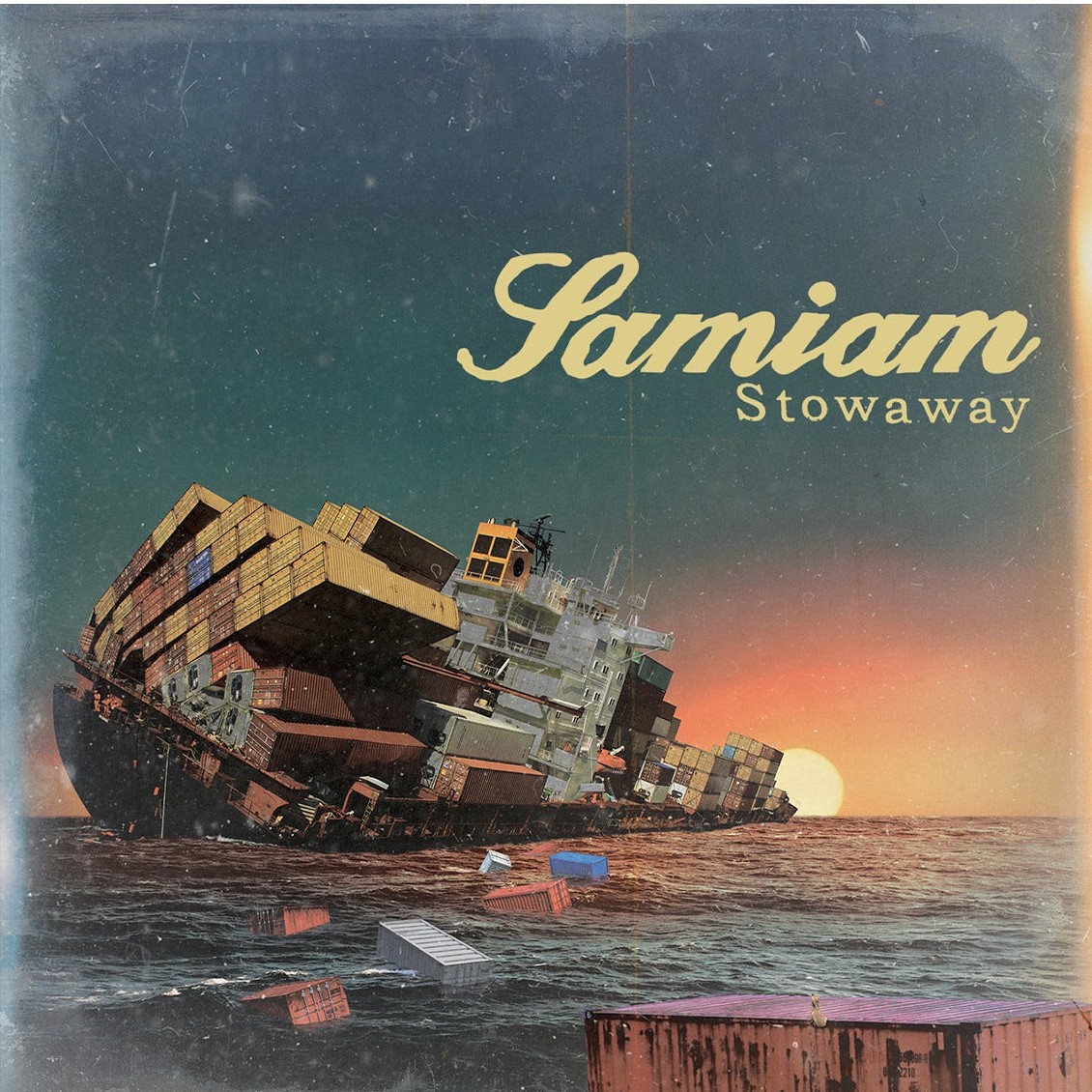
Samiam – Stowaway (review)

“Don’t call it a comeback. Call it an evolution, a rebirth, a continuation after twelve years of absence.”

So said the review of this album on Punktastic. I’d rather call it a resurgence. Strange band, Samiam. They formed in 1988 with their first couple of albums being released on indie label New Red Archives. Then, after a single album on Atlantic (1994’s Clumsy), they signed to Hopeless, home of the disenfranchised. Stowaway, their first on Pure Noise Records, is the California quintet’s first album since 2011’s Trip. That’s 12 long years. Where have you been, guys? I don’t think they ever officially broke up, they’ve toured intermittently, sometimes with some big artists (Green Day and Blink 182 included), but they’ve hardly been prolific. I didn’t think they even had a website, but evidently they do.

It requires something akin to a perfect storm for a band to become successful, especially given the fractured state of the music industry, and momentum is a key factor. Sadly, Samiam just never seemed to have any. They had everything else; songs, an identity, a following, talent, but they can’t seem to keep it together long enough to build up a head of steam. They are a bit like that old friend you have that spontaneously shows up every couple of years. You have a great night, then they go back underground and you don’t see them again for ages.

Anyway, here we are. If I had to describe the Samiam sound I’d go for a mash up between Smashing Pumpkins, Alkaline Trio, Deftones and maybe a touch of the Wonder Years. On Stowaway they race out of the blocks with Lake Speed, which segways neatly into lead single Chrystalized. All layered vocals, power chords, and soaring choruses, this is just about as perfect a track as you’ll ever hear. Listen to it. Just listen to it!

The pace doesn’t let up for Lights Out, Little Hustler, Shoulda Stayed and Shut Down. Samiam are at their best when they are being melodic, treading the thin line between thrashing about and staring at their shoes. Their music often has a kid of wistful, nostalgic feel, similar to latter-era Bouncing Souls, and it takes a couple of tracks before you remember how good this band were. Or are. A highlight for me is Monterey Canyon which is apparently about being an octopus, but don’t let that put you off. The second half of the album dips slightly but comes roaring back with Something, one of those that sticks in your head for days after a single listen. Guitarist Sean Kennerly said of the track: “The light perkiness of the music is belied by the heavy subject matter – searching for meaning and reason inside of everyday actions.”

Stowaway is closed out with the mid-tempo title track, which also happens to be the longest song on the record by some margin (though its still only 4:12). This just feels like an important album, one that I will probably forget about for a year, then rediscover one night and curse myself out for not paying it more attention to it. I only ever listen to MP3 and flac files these days but bizarrely, this album was practically crying out to be played on vinyl. Go on, treat yourself. I only hope we don’t have to wait another 12 years for a follow up.

Stowaway is out now on Pure Noise Records.


Bruce Springsteen @ Villa Park, Birmingham, 16 June 2023

I’ve seen the Boss a bunch of times before. The first time was at Wembley Arena as a wide-eyed 18-year old, and it’s been one hell of a ride since then. Jobs, friendships, relationships and Prime Ministers have come and gone, and there have been endless ups, downs and roundabouts. It almost feels like Bruce has been beside me every step of the way, not only soundtracking my life but encouraging me, guiding me, cheering from the sidelines and chastising me when I needed it. Whenever I hear Born to Run I am 16 again, and my life is a blank canvass. Trouble River will always remind me of being stuck on a bus in the middle of a torrential flood in New York city circa 1999, and Follow that Dream transports me to a summer’s day at the San Siro in the midst of a break-up in 2003 when I first heard it.

I didn’t spend anything like the couple of grand for a ticket for this gig often touted in the press, but it didn’t come cheap. Add on travel expenses, a night in a city centre hotel during peak season, and a few £7.50 pints, and the cost probably weigh in around the £600 mark. It’s a lot. I could probably have gone on a package holiday anywhere on the contiednent for less. But having missed the last couple of tours, and then Covid sticking its oar in, I felt this one is important. I hope I’m wrong, but I have a sneaky feeling this might be the last global outing for Bruce and the E Streeters.

To be brutally honest, I wasn’t expecting much. There are a few reasons for this. For starters, Springsteen and the original E Streeters are all well into their seventies now. You can’t expect the same level of performance they gave in their thirties. Nobody other than Father Time is to blame for that. There’s also the much-derided ticketing drama which left a sour taste in many mouths, and a set-list that has barely changed since the tour kicked off in Tampa back in February. This is unusual for Bruce and, perhaps unfairly, not what fans have come to expect. In fact, some shows have been identical to others, which is almost unheard of in Bruce folklore. One thing I have always admired about the Boss is his inherent ability to be spontaneous and make every show special. If you look back over pre-2023 set lists, you’ll be hard pressed to find any duplicates, especially after the original River tour, something which makes each and every show unique. On recent jaunts, Bruce has taken sign requests from the crowd, some of them pretty obscure, in an attempt to ‘challenge’ the band.

Then there’s the choice of material. The general theme is one of introspection, retrospection and loss. This is exemplified by Bruce’s story, one of the few monologues he indulges in, about being the last surviving member of his first band going into Last Man Standing. Ghosts, a stand-out track from his most recent album Letter to You deals with the same subject matter, and while I initially thought the title track was a love song, after seeing it performed live, and Bruce’s constant gesticulations to the crowd, it becomes clear that the song is, in fact, a message to fans:

Things I found out through hard times and good

I wrote ’em all out in ink and blood

Dug deep in my soul and signed my name true

And sent it in my letter to you

But it isn’t all maudlin contemplation. It’s almost as if the show is structured to reflect the five stages of grief; denial, anger, bargaining, depression, and acceptance, with one last stage tacked onto the end for good measure: joy for a life lived well. It makes sense. We don’t realise it so much when we’re young, but as we progress through life, death becomes an ever more prevailing aspect until, inevitably, we all succumb. Most shows on this tour so far have started with a defiant No Surrender, almost certainly a response to the Covid nightmare, and maybe the fragility of life itself, and have included stompers like Bobby Jean, Glory Days, Mary’s Place, Out in the Streets and Backsteets. However, the songs seem to take on a new context in this setting, and the sometimes whimsical lyrics are highlighted. This is never more evident than during a stripped-down My Hometown, which drew one of the biggest cheers of the evening.

Miami Steve Van Zandt said on Twitter recently that though there would be the odd surprise, generally, this time out Bruce had a particular story he wanted to tell, and chose to perform songs that fit the narrative. Despite featuring nothing from a clutch of albums including Greetings from Asbury Park, NJ, Human Touch, Lucky Town, The Ghost of Tom Joad, Magic, Working on a Dream, Devils & Dust, Tunnel of Love, or Western Stars, the songs he does play tonight offer a pretty fair and balanced representation of his life and work.

True to Miami Steve’s word, most nights he manages to shoehorn in a track mid-set that he hasn’t played much (if at all), this swiftly becoming the mechanism by which to make each gig special. At other dates he has busted out I’m on Fire, Brilliant Disguise, Trapped, Jungleland, Pay Me My Money Down, Working on the Highway and a cover of Dirty Water. We got the tour debut of The River. I’ll take that. All things considered, it’s a cracking set-list, and I couldn’t have done better if I’d sat down and written it myself, except perhaps for including Human Touch, Darkness on the Edge of Town, or Living Proof somewhere and substituting Incident on 57th Street for Kitty’s Back. But meh, we all have our whims. Perhaps the greatest advantage of sticking to the same basic set is that each member of the band has the opportunity to nail their parts and polish them to the nth degree.

The thing that will stay with me is the outpouring of joy when Bruce stepped on stage, which was maintained for most of the show. I looked around and everyone in attendance was smiling and hugging it out. It was clear that a large percentage of these people were strangers, or at least had been until today. There were even a few tears. I think that’s part of the Bruce live experience. It’s been a long, bumpy road for a lot of Bruce fans, and there is a kind of solidarity to be found in that. These songs bind us all inexorably together. In the words of local news outlet Birmingham Live: “If you could have somehow harvested the loving energy that the Birmingham crowd were expressing for this troupe, you’d have had enough electricity to illuminate the city skyline for the rest of the year.”

The high-octane set flagged a little in the middle, with an extended Kitty’s Back and The E Street Shuffle either side of his cover of the Commodores’ Nightshift, but I think we all needed a breather by that point. At least this section gave some fringe members of the band, like the backing singers and the E Street Horns, their moment in the spotlight, not to mention Max Weinberg, who is still one of the best drummers on the planet.

Bruce plays with the format from time to time, as is his want, and is not opposed to doing the unexpected, but he is the consummate performer and knows how to work a crowd like nobody else. There were many highlights, but for me, a blistering Prove it all Night stood out and closing out the main set with one-two punch of Badlands and Thunder Road, was a stroke of genius. Both songs are equally anthemic and powerful, and carry the same message of hope and optimism. It’s songs like these, with lyrics about yearning for more from life and looking for a way out of a humdrum existence, that set me on my own path in life. Judging by the crowd reaction, I wasn’t the only one.

After barely time to draw breath, the encores begin with a fired up version of Born in the USA, a song misunderstood for so long which has now become a crucial cornerstone of Springsteen’s repertoire. Even before the last notes of a rollicking Dancing in the Dark have faded out, the big screens either side of the stage start carrying tributes to Clarence Clemons and Danny Federici, two members of the E Street Band not with us any more, to complement a stirring rendition of Clarence’s unofficial theme song Tenth Avenue Freeze Out, another ode to the past. These days saxophone duties are handled by Jake Clemons, Clarence’s nephew, who deserves a special mention. When first inducted into the E Street band in 2012, a year after his uncle’s passing, he had some pretty big shoes to fill. He dropped a few bum notes here and there and lacked the range, power, and stage presence of an on-form Clarence. There’s no shame in that, the man was a force of nature, but Jake has really blossomed in recent years. Now, his playing is almost indistinguishable from the Big Man’s, and that’s probably the highest compliment you can give him.

The mammoth almost three-hour set closes with a poignant solo acoustic version of I’ll See You in my Dreams, another track from Letter to You. A melancholy, yet fitting way to round out an unforgettable evening. Despite ostensibly being about losing someone close, the song provides hope in the line: “For death is not the end, and I’ll see you in my dreams,” reaffirming for the last time the core narrative that one often overlooked consequence of death is a new perspective, or even appreciation of life. It doesn’t always seem like it, but it could be said in that regard death is a gift to the living.

All dodgy photography by me. GO HERE for previous Bruce Blogs.


So Long Astoria @ Twenty!

“My favourite thing to do was run away.”

– Richard Hell

I can’t remember how I first discovered The Ataris, though it was probably through their cover of Boys of Summer, which was on heavy rotation on MTV at the time. I loved the original, but the cover was spiky, energetic, and had a harder edge. This was at the height of my pop punk phase, so I decided to take a punt and buy the album. That meant a trip to HMV in Cardiff, which was where you had to go to get anything cool if you lived in the south Wales valleys twenty years ago. That, or Spillers Records, which is still there and now the oldest independent record store in the world.

Kind of like weed, So Long Astoria was my gateway album, and for the next couple of years I feverishly set about collecting everything the Ataris had ever put out. I still do, though they’ve lapsed into a funk over the past few years and apart from the odd single, live recording and demo, haven’t released anything new since 2007, though they’ve been threatening a new album for a couple of years now. They’ve never been the most settled outfit, with lots of label and line-up changes, the only constant being singer/songwriter/guitarist Kris Roe.

So Long Astoria, which like all the best albums, is a snapshot in time. Whenever I play it, I am magically transported back to the summer of 2003. It was a special time. My first book had just come out to modest success, I’d left my factory job, which I’d held for almost a decade, and was on the verge of moving to Southampton to study journalism at uni. I’d been writing diligently for eight or nine years by that point, and the hard work was finally beginning to pay dividends. I was also trying to extricate myself from a very bruising three-year relationship that had turned decidedly toxic. In short, my whole world had been turned on its head. Whereas before, it was a world of drudgery and stifled dreams, now it was one of unlimited possibilities.

Looking back, that period felt a lot like a dream. Mostly, I felt a sense of freedom I’d never experienced before. I also felt lucky, and proud that my hard work was finally paying off. I was also slightly terrified. Change is always terrifying, especially when everything changes at the same time. It seemed like every day I had to make potentially life-changing decisions, and I was afraid of fucking things up. There was excitement for my new life, and a duty to navigate my ship responsibly, but there was also a yearning for the past, where my existence was more structured and conventional. I’d spent most of my life trying to break out of a box and when I finally managed it, I had no idea what to do next.

The group of songs on So Long Astoria all fit a certain mould. They are full of optimism, yet many are also tinged with sorrow or regret. It’s an album of new beginnings and second chances. It’s looking forward, but glancing behind with a plaintive, wistful gaze. That fits with the overall context of the album’s release, as it was the band’s major label debut (for Columbia Records) after spending their early career on smaller labels like Kung Fu and Fat Wreck Chords. The mood is encapsulated in the title, a reference to the classic eighties flick The Goonies which is set in a place called Astoria. Roe has said the album’s overall theme was inspired by the book Go Now by Richard Hell (who was a member of several notable punk bands including the Neon Boys, Television and The Heartbreakers with Johnny Thunders) which alluded to the concept that memories are better than life itself. “I wanted this record to portray, that life is only as good as the memories we make,” Roe later explained, echoing the lyrics in the title track that kicks off the album.

The theme of escaping small town life and somehow making it big is carried onto the next song, Takeoffs and Landings, which is about the dissolution of a relationship and probably my favourite cut on the album. That and many other songs like Summer of ’79 and All you Can Ever Learn is What You already Know maintain the tempo and call to mind vintage Bouncing Souls or Sum 41. But they aren’t all spiky pop punk rockers. There is depth here, too. My Reply is about a hospitalized fan close to death and Unopened Letter to the World is an ode to American poet Emily Dickinson.

One of the key tracks is first single In this Diary, which was released on 11 February 2003 and later featured in teen heist comedy The Perfect Score. The below verse is pretty typical of the lyrical content:

I guess when it comes down to it
Being grown up isn’t half as fun as growing up
These are the best days of our lives
The only thing that matters is just following your heart
And eventually you’ll finally get it right

Some versions have a selection of bonus tracks on the end of the standard 13-track release. The pick of these for me is a remake of I Won’t Spend Another Night Alone, a song from the album Blue skies, Broken Hearts… Next 12 Exits, but A Beautiful Mistake, which came out as a b-side in some territories, and the cover of Rock n’ Roll High School by the Ramones are also worth checking out.

So Long Astoria was released on 4 March 2003 and was certified gold in America, selling over 700,000 copies. It sold 33,000 in its first week, debuting at number 24 on the Billboard 200. and charted at a slightly less impressive number 92 in the UK. I was hoping we’d get one of those deluxe 16-disc boxed set reissues, but it doesn’t look like that’s going to happen. It wouldn’t really be necessary as the demos and live recordings from the era are available on the band’s Bandcamp page. After all this time, the album’s impact remains undimmed, especially among pop punk aficionados. The album was included at number 25 on Rock Sound’s 51 Most Essential Pop Punk Albums of All Time list. They later ranked it at number 97 on the list of best albums in their lifetime, and as recently as 2017 it was voted number 30 in Kerrang! Magazine’s list of Greatest Pop Punk Albums of all Time, the entry saying:

“While his powers have waned, Kris Roe’s skill with three chords and the truth was once second to virtually no-one. The Ataris’ So Long, Astoria is solid-gold evidence of that fact while their cover of Don Henley’s Boys Of Summer remains as good as (dare we say, even better than) the original.”

They are not wrong. Of all the album’s I have ever listened to, So Long Astoria is one I cherish most, and probably always will. If you’ve never heard it, go treat yourself.


Design a site like this with WordPress.com
Get started