Tag Archives: films

RetView #84 – Children Shouldn’t Play with Dead Things (1972)

Title: Children Shouldn’t Play with Dead Things

Year of Release: 1972

Director: Bob Clark

Length: 87 mins

Starring: Alan Ormsby, Anya Ormsby, Valerie Mamches, Jeff Gillen, Paul Cronin, Jane Daly, Bruce Solomon

Children Shouldn’t Play with Dead Things (also known as Revenge of the Living Dead, Things from the Dead, Cemetery of the Dead, The Siege of the Living Dead, and Zreaks) is an iconic piece of work co-written and directed by Bob Clark, who would go on to direct Deathdream (1974) and the classic frat comedy Porky’s. Riffing off Night of the Living Dead (1968), the script was written in 10 days and the movie shot in 14 on a budget of just $50,000, with most of the people working on it being college friends making it a true labour of love. Most of the cast were not even trained actors, with only a select few going to to have modest careers in TV or cinema. Also, this must be one of the very few zombie movies starring a married couple, Alan and Anya Ormsby who’s characters, hilariously, are also named Alan and Anya. Nod, nod, wink, wink. The quips and one-liners come thick and fast (“What a bunch of stiffs!”). At least, they do until the shit hits the fan.

The story follows a theatre troupe (“I do have talent when I have a good part!”) who travel by boat to an island off the coast of Miami that is mainly used as a cemetery for criminals, for a night of campy fun. When they arrive, their director Alan (Ormsby), a twisted, sadistic individual, tells the motley crew of actors, whom he refers as his ‘children’, stories about the island’s grisly history in a concerted effort to unsettle them. He also digs up the corpse of a man named Orville, which is certain to make any party go with a bang. The names written on the styrofoam tombstones, by the way, are the names of various crew members.

“They’re having trouble all over the world with graverobbbers, ghouls, and people breaking into cemeteries.”

“But we’re the graverobbers. Who’s going to bother us?”

“Nobody but demons.”

And zombies, as we are soon to discover.

Eventually, Alan leads the group to a cottage where they are supposed to spend the night, and then proceeds to get robed up and prepare the group for an ancient ritual to summon the dead. Probably not the smartest move when you’re on an island off the coast of Miami that is mainly used as a cemetery for criminals, but okay then. When some of the group aren’t so keen (understandably) he threatens them with the sack, which I am pretty sure would be a breach of some ethical code or other these days, but this was the seventies. Alan’s bullying and cheap jokes soon stop when the gang realise the ritual they performed had worked, and the entire island is now swarming with freshly reanimated zombies. It kind of makes you wonder what they expected to happen. Even for a low-budget seventies horror comedy film, “They seem pretty slow. Why don’t we make a run for it?” has to be one of the dumbest lines ever uttered.

In a desperate attempt to get themselves out of the mess they had created, the group attempts to perform another ritual to return the zombies to their graves. And it works! For a bit. However, they neglect to return Orville to his grave, prompting the zombies to re-emerge and ambush the group as they leave the house. Alan and Anya retreat back inside, and in a last ditch effort to save himself, despicable Alan throws Anya to the zombies and locks himself in the bedroom where he left Orville’s corpse, not realising Orville is now a zombie, too.

In these #RetView posts I try to keep spoilers to a minimum and not to discuss plot holes or endings. I’m not here to be a killjoy, and my hope is that readers will seek these films out themselves. On this occasion, though, I feel I have to mention it. The zombies get on the boat, see. The boat the group had taken to the island. As the zombies board it, you can see the inviting lights of Miami twinkling in the background, the implication being that the zombies will soon enter the mainstream, so to speak. But… who is going to sail the boat? Sailing a boat is a tricky business, or so I imagine. These zombies are shambling husks that can barely walk. I doubt very much any of them retain enough brain function, let alone dexterity, to captain a boat across a choppy section of water. I know I’m probably pedantic but as the credits rolled all I could think was, “Shit! The zombies got on the boat!” which was, I suppose, the desired effect. But this was quickly followed by, “Oh, it’s okay. they won’t get far. We’re good.”

Children Shouldn’t Play with Dead Things is currently rocking a 42% rating on review site Rotten Tomatoes and in reviewing the later DVD release, Bloody Disgusting said: “[This] is well worth your time if you haven’t gotten around to it yet [and] really should be held among the top zombie movies of all time.” Meanwhile, the website 100 Misspent Hours was less generous, saying, “The biggest problem with Children Shouldn’t Play with Dead Things is that it’s an 85-minute zombie movie in which the zombies don’t turn up until minute 64.”

Bob Clark was said to have been considering a remake, but plans were curtailed when his Infiniti I30 was hit by a drunk driver in April 2007. Unless, of course, Alan Ormsby decides to raise him from the dead. Since then, other rumours of a remake have circulated, but none have so far come to fruition. It is available as a free download from the Internet Archive.

Trivia Corner

Children Shouldn’t Play With Dead Things, a track on Finnish heavy/doom metal band Wolfshead’s 2017 album Leaden, is based on the movie.


Brats (2024) (Review)

I grew up (mostly) in the eighties, so I was looking forward to this new release which promised to explore the Brat Pack, a ‘group of young actors who frequently appeared together in coming-of-age films, and the impact on their lives and careers.’ Sadly, I was disappointed. This is less an evaluation of the contribution the Brat Pack made to eighties pop culture and more a self-indulgent 90-minute poor-me rant by Andrew McCarthy about how being called a ‘brat’ forty-plus years ago hurt his feelings. It’s clear the guy has been stewing over it for decades, and he sets out here, in his role of writer/director, to prove once and for all, how hard he has it and how unfair everything is. I can’t think of anything more bratty.

For those who don’t know, the ‘Brat Pack’ was a nickname given to a group of young actors and actresses who frequently appeared together in a succession of coming-of-age films, the most enduring of which are probably The Breakfast Club (1985), St Elmo’s Fire (1985), Pretty in Pink (1986) and About Last Night (1986). The films themselves have been described as representative of the “socially apathetic, cynical, money-possessed and ideologically barren eighties generation,” and focused primarily on middle-class teenage angst. They made use of adolescent archetypes like alienation, isolation, and sexual frustration, and, for some reason, were often set in the suburbs of Chicago. An appearance in one or both of The Breakfast Club or St Elmo’s Fire is often considered the prerequisite for being a core Brat Pack member which puts Emilio Estevez, Anthony Michael Hall, Rob Lowe, Demi Moore, Judd Nelson, Molly Ringwald, Ally Sheedy, and McCarthy himself firmly in the frame, though there are numerous peripherals including James Spader, Robert Downey Jr, Jon Cryer, Mathew Broderick, John Cusack, Mary Stuart Masterson, and Lea Thompson. Even the likes of Tom Cruise, Nicolas Cage, Sean Penn, Charlie Sheen, and Kiefer Sutherland couldn’t escape being guilty by association. The unofficial president of the Brat Pack was usually thought to be Emilio Estevez (son of Martin Sheen and brother of Charlie) who was also once engaged to Demi Moore, and the name itself was a homage to the so-called Rat Pack of sixties entertainers centred around Las Vegas casinos comprising the likes of Mickey Rooney, Judy Garland, Frank Sinatra, Dean Martin, and Sammy Davis. This small detail seems to have been completely lost on McCarthy, who rails against the word ‘brat’ being taken to mean spoiled and entitled, and claims it attempts to nullify his talent and had an abject effect on his career.

When I started watching Brats I did so with a certain sense of empathy. These were all young people who, you could argue, were sometimes harshly treated by the media (though you could argue no more than any other entertainer). Actors can be a sensitive bunch at the best of times. But that pretence wore thin very quickly. I mean, being called a brat isn’t the worst thing in the world, is it? Has McCarthy watched the news since 1985? Anyway, enraged by the injustice of it all, one by one McCarthy tracks down (most of) his old mates and asks leading questions like, “Where were you when you first heard the term Brat Pack,” and “How did it make you feel?”

Cue morose music and crocodile tears. It’s nice to see that while many admit to feeling a bit pissed off about it at the time, the majority of Brat Packers chose not to carry that burden with them and shrugged it off, refusing to be sucked into the well of self pity McCarthy seems to have been living in ever since. You get the impression most of the people he talks to are just humouring him. He hasn’t been in touch with them in decades. For most of us it would probably be the equivalent of spontaneously popping round to see someone you worked with for three weeks forty-plus years ago and haven’t seen since. Emilio Estevez seems a bit bemused by it all. By far the most insightful contribution comes from Demi Moore, who manages to contextualise the whole saga in a mature, upbeat way, and even puts a positive spin on it. There’s no denying that for a while there, everyone wanted to be in the Brat Pack. They were the epitome of cool, both on and off camera, and all got very rich very quickly. Surely there’s a lot to be thankful for. If only McCarthy’s could put his well-worn victim card away long enough to realise how truly fortunate he has been. For Heaven’s sake, the label itself is nowhere near as caustic as it once was, and is now imbued more with reverence than anything else. And another thing. This doc tries way too hard to hit the right notes. For example, a random black guy pops up just to tell us that there were very few black people in the Brat Pack films. I still don’t know who he was. There’s no in-depth discussion about it, no attempt at justification, no explanation, not even a proper introduction for the interviewee. It’s just another awkward moment.

Talking about awkward… The doc culminates in McCarthy tracking down New York journalist David Blum, the person credited with starting the whole thing when he wrote an article called “Hollywood’s Brat Pack” for New York magazine back in 1985. When McCarthy asks him if he’s sorry, or if he thinks he could or should have been ‘kinder,’ Blum is having none of it and says instead that he always thought he deserved more recognition for coining the phrase. And he’s right. Let’s be fair, he was probably paid about $200 for that article, he was just doing his job and doesn’t want to waste his time talking about it now. McCarthy needs to acknowledge that being in the public eye cuts both ways. You have to take the rough with the smooth. There’s certainly a case to be made that the whole Brat Pack thing only strengthened McCarthy’s clout and led to producers writing him bigger cheques. For a while, at least. You could argue that at the root of the ‘problem’ lies a group young actors and actresses being packaged together in big budget, zeitgeist-capturing films by savvy producers and directors looking to tap into certain audiences. What’s wrong with that? Hollywood has always done it. Worse things happen at sea, as they say.

By this point, the constant whining is getting tiresome and repetitive, and you can’t help but feel McCarthy is predisposed to this kind of behaviour. This is a man who, by his own account, had an alcohol problem at the age of 12, long before he started acting, and once wrote a book called ‘The Longest Way Home: One Man’s Quest for the Courage to Settle Down’. Groan. The signs were there. He seems like the type who would gladly point fingers at everybody else rather than accept responsibility for his own failings. Personally, I think Weekend at Bernies (1989) was more harmful to his career than some jobbing journalist calling him and his mates brats. I want to see a documentary about that.


RetView #78 – Burnt Offerings (1975)

Title: Burnt Offerings

Year of Release: 1975

Director: Dan Curtis

Length: 116 mins

Starring: Oliver Reed, Karen Black, Burgess Meredith, Eileen Heckart, Bette Davis, Anthony James

What a stellar cast. Oliver Reed and Bette Davis each have (had, sorry) the ability to elevate any only crap to whole new levels, and to have them both in the same film is just absurd. Being an English language geek, however, it took me a while to get past that title. Is it burned or burnt? Turns out it can be both though the former is more common in American English, which makes it even more surprising that they’ve chosen to go with ‘Burnt.’ It takes its title from the book of the same name by American author Robert Marasco published in 1973. Anyway, back to the movie, and this is very much a slow burner (get in!) low on gore and big on atmosphere typical of the raft of seventies haunted house films. Interestingly, Stephen King lists it as one of his favourite horror movies and there is ample evidence to suggest that the original book at least partly inspired his own novel The Shining. It won a slew of Saturn Awards, including Best Horror Film, and Best Director. Bette Davis also won the award for Best Supporting Actress.

Writer Ben Rolf (Reed), his wife Marian (Black), their 12-year-old son Davey and Ben’s elderly aunt Elizabeth (Davis) visit a large, remote, neo-classical 19th-century mansion with a view to renting it for the summer. The home’s eccentric owners, elderly siblings Arnold (Meredith) and Roz Allardyce (Heckart), offer them the property at a bargain price of $900 for the entire summer, which seems too good to be true. And it is. The offer comes with with a request: the Allardyce’s elderly mother, who they claim is 85 but could pass for spritely 59, will continue to live in her upstairs room, and the Rolfs are to provide her with meals during their stay. The old woman is obsessed with privacy and will not interact with them, so meals are to be left outside her door. Like that isn’t a red flag. Anyway, Marian soon becomes obsessed with the house, and eventually starts wearing some Victorian-era clothes she finds and distances herself from the rest of the family. Various unusual circumstances occur: Davey falls and hurts his knee playing in the garden, a dead plant starts to grow again, Ben comes a cropper with champagne bottle, and a malfunctioning light bulb is mysteriously repaired. Ben is also haunted by visions of an eerie, grinning hearse driver (James) who he had first seen at his mother’s funeral years earlier.

Despite the awards and the all-star cast, Burnt Offerings received mixed reviews. George Anderson of the Pittsburgh Post-Gazette criticized it as being “dependent on typical horror tropes such as shocks and loud music hits” and described the tension as, “A lot of sinister huffing and puffing to little effect”. While praising Meredith and Heckart (who had won an academy Award for Best Supporting Actress in 1972 for her performance in Butterflies are Free) as the best performers in the film, Richard Dyer of The Boston Globe argued the source material gave the actors too little to work with. He called Black, who was four months pregnant during filming, “particularly inconsistent”, said Reed looked “like an eggplant”, and stated Davis “tries to create a Bette Davis character without any Bette Davis lines to work with.” At the other end of the spectrum, in a contemporary summary, Rovi Donald Guarisco of Movie Guide called the film “worthy of rediscovery by the horror fans who missed it the first time”, concluding that “In the end, Burnt Offerings is probably a bit too methodical in its pacing for viewers accustomed to slam-bang approach of post-’70s horror fare, but seasoned horror fans will find plenty to enjoy.”

For what it’s worth, I thought the performances were superb but found the overall package slightly overwrought and overlong, especially for a film where, frankly, there isn’t much plot. You could easily cut 20-25 minutes off the running time and lose nothing except some snivelling from Bette Davis and some posturing by Ollie Reed. In short, there’s more style here than substance, but what substance!

Trivia Corner

Bette Davis reportedly detested Oliver Reed. She insisted on referring to him as ‘that man’ and only speaking to him when they shared on-screen dialogue. After filming, she described him as “possibly one of the most loathesome human beings I have ever had the misfortune of meeting.” She also had conflicts with Karen Black, feeling that Black did not treat her with an appropriate degree of respect. Oh dear.


RetView #74 – Cat People (1942)

Title: Cat People

Year of Release: 1942

Director: Jacques Tourneur

Length: 73 mins

Starring: Simone Simon, Kent Smith, Tom Conway, Jane Randolph, Jack Holt

God knows there are enough horror movies about werewolves, vampires and zombies. In my humble opinion, there just aren’t enough films about cats or, for that matter, people descended from an ancient tribes of cat people who metamorphose into panthers when sexually aroused. Enter Cat People. This classic from the war years was produced by a chap called Val Lewton, who had just been named head of the ominous-sounding ‘horror unit’ at RKO studios formed to challenge Universal’s stranglehold on the burgeoning horror film industry. His brief was simple; make horror films. Each one had to come in under a budget or $150,000 and run for under 75 minutes, thereby ensuring they were tailor made for the trend of marketing films as double features. Over the next five years, Lewton would deliver a string of genre-defining classics including I Walked with a Zombie (1943), The Leopard Man (1943) and Boris Karloff’s Isle of the Dead (1945). All these seminal titles stemmed from the unprecedented commercial success of Cat People, which despite being made in just 18 days raked in $4 million (this figure has been disputed) making it RKO’s top moneyspinner of the year. It has since become known as a landmark movie of the era, and in 1993 was selected by the Library of Congress for preservation in the National Film Registry. It led to a sequel, Curse of the Cat People (1944) and a later remake starring Nastassja Kinski and featuring a soundtrack by David Bowie.

The film opens at Central Park Zoo, New York City, where young Serbian-born fashion illustrator Irena Dubrovna (Simon) is drawing a black panther. She catches the eye of marine engineer Oliver Reed (Smith), who strikes up a flirty conversation. Irena invites him to her apartment for tea, where Oliver is intrigued by a statue of a medieval warrior on horseback impaling a large cat with his sword. Irena informs him that the figure is King John of Serbia, and that the cat is a metaphorical depiction representing evil. According to legend, the residents of her home village gradually turned to witchcraft and devil worship after being enslaved by the Mameluks, and when King John drove the Mameluks out and saw what the villagers had become, he had them “put to the sword”. However, “the wisest and the most wicked” escaped into the mountains, the implication being, of course, that Irena’s ancestors were among them. Oliver dismisses these as “fairy tales,” and now deeply infatuated, buys Irena a kitten as a gift. When it hisses at her, she insists on taking it back to the pet shop where all the animals go wild when she enters, which should have been a red flag. Irena gradually reveals that she believes she is descended from the ‘cat people’ of her village, and that will transform into a panther if aroused. Despite that, or maybe because of that, Oliver proposes and the two are married. However, afraid of the consequences, she is reluctant to consummate the marriage, the situation compounded when she tries to touch a bird and inadvertently frightens it to death. Oliver is understanding and patient at first, then as his frustration grows, he persuades Irena to see a psychiatrist (Conway). It’s no use, and Oliver is effectively pushed into the arms of his beautiful assistant, Alice (Randolph). Irena doesn’t like that. She doesn’t like it one bit. Hell hath no fury like a woman descended from an ancient tribe of Serbian cat people who metamorphose into panthers when aroused scorned.

Darkly insidious, Cat People is a masterclass in foreshadowing. At one point Alice shivers, prompting Oliver to ask her if she is cold. She replies, “A cat just walked over my grave.” Simone Simon was cast in the role of Irena by Lewton himself who commented that, “I’d like to have a girl with a little kitten face, cute and soft and cuddly, and seemingly not at all dangerous.” Perhaps as a reaction to RKO’s initial misgivings, the movie was generally panned by critics. Wanda Hale of the New York Daily News said it, “Tries hard to be a melodrama… but it doesn’t try hard enough”, while Bosley Crowther of The New York Times described it as a “Labored and obvious attempt to induce shock.” He (among others) also slated Simon’s acting, stating that actresses who are trying to portray “[feline] temptations – in straight horror pictures, at least – should exercise their digits a bit more freely than does Simone Simon.” Simon herself, along with fellow female lead Jane Randolph, publicly expressed displeasure at her performance.

Nevertheless, in more recent times, Cat People has attained ‘classic’ status. Noted film critic Chris Fujiwara dubbed it “A perfect film,” adding that even its flaws “have become classic,” and dismissing the withering criticisms of other reviewers. He further stated that Cat People, “Is still contagious; the viewer can still share the surprise and pleasure the film evoked in audiences who discovered this unheralded B horror film on its initial release”. He wasn’t alone in his thinking, as in 2006 Roger Ebert included it in his list of Great Movies noting that the film was, “Frightening in an eerie, mysterious way that was hard to define [and had] an undertone of sexual danger that was more ominous because it was never acted upon”.

Trivia Corner:

The suits at RKO were allegedly very dissatisfied with the finished product, suggesting it was too subtle and could not possibly compete with Universal’s more immediate brand of horror that gave us such delights as The Mummy (1932), Bride of Frankenstein (1935), Frankenstein Meets the Wolf Man (1942) and Creature from the Black Lagoon (1954).


RetView #60 – Death Ship (1980)

Title: Death Ship

Year of Release: 1980

Director: Alvin Rakoff

Length: 85 mins

Starring: Richard Crenna, George Kennedy, Nick Mancuso, Sally Ann Howes, Kate Reid, Saul Rubinek

I’d never even heard of this Bloodstar Films production until I read about it in an issue of the venerated Fortean Times magazine (FT396, if you’re interested). I’ve always had a thing for Nazi zombies, as referenced before in previous RetViews Shock Waves and Outpost. I also recently discovered that I have a thing for horror set on ships. I have no idea why that is. It could be something about the bleak, all-encompassing emptiness of being at sea, but it’s probably more to do with the fact that if some supernatural shit befalls you in a house, or even a cabin buried in the woods, you can always just count your losses and run. You can’t do that on a ship. You have to stay and face whatever evil shit is about to befall you. Anyway, the potential for Nazi zombies and an evil sea-faring vessel combo suckered me right into Death Ship. Throw in Richard Crenna from the Rambo films, Saul Rubinek from True Romance (and Frasier) and George Kennedy from, er, Cool Hand Luke and Earthquake, I was already sold. And if all that wasn’t enough, just look at this poster!

So what’s it all about?

Well, stuffy Captain Ashland (Kennedy) is on his final cruise before handing over the reigns to Trevor Marshall (Crenna) who has brought his wife (Howes, in her final film appearance) and kids along on the trip. At a glitzy on-ship party there’s a band playing, some drunk people, and lots of terrible dad dancing. Everyone is having a great time. Except Captain Ashland, who you doubt could have a great time anywhere. But all the decadence and debauchery comes to a sudden halt when the cruise liner smashes into something and sinks, leaving just a handful of survivors unfortunately including Marshall’s annoying kids, a lecherous young officer, and a near-hysterical passenger, floating around on a makeshift raft. The next morning they find the grumpy captain in the water, which is a stroke of luck, or maybe not, then they come across a massive, ominous-looking black ship anchored in the middle of the ocean with a ladder down ready to receive them, which seems like another mad stroke of luck but turns out to be quite the opposite. Thinking they’ve found salvation, the survivors board the strange ship to find it deserted. Still, it’s better than being on the raft, or so they think. The first sign that something isn’t right comes when ship’s entertainer Jackie (Rubinek) is suddenly scooped up by a possessed winch and dumped screaming head first into the sea. Bye, Jackie. It was fun while it lasted. Things degenerate from there. The remaining survivors, whilst trying to navigate this mysterious vessel full of disembodied voices, creepy shadows and inanimate objects that take on lives of their own, get picked off one-by-one, until only the good-natured Trevor Marshall, his wife, and those annoying kids are left and ultimately find themselves back where they started on another flimsy-looking rafty-thing in the water. There’s probably a message there.

Life and soul of the party Captain Ashland and the underlying friction between him and his would-be replacement Marshall is instrumental in all this.

“You don’t know how to handle a crew or passengers!”
“Maybe so, Marshall. But I know how to handle ships.”

At one point, Ashland even dons a discarded German navy uniform and appears to channel the ship’s long-dead and rather sadistic head honcho whilst embarking on a murderous rampage. It all leads up to the highly anticipated revelation, which ties things up nicely and makes for a nice, satisfying conclusion. Especially after the evil Captain Ashland comes to a suitably sticky end and, of course, good triumphs over evil.

It’s easy to see why Death Ship got lost in the shuffle. It doesn’t have the immediacy of other popular horror flicks of the day like Cannibal Holocaust, Friday the 13th or Prom Night. It could, however, be a distant cousin of The Fog. It has a much more brooding atmosphere and, dare I say, slightly more substance reinforced by some remarkable cinematography, an impressive plot, and a killer (sorry) cast. It’s picked up a few retrospective reviews like this one on Warped Perspective, which is a real indicator as to whether a movie is truly attaining cult status, and review aggregate site Rotten Tomatoes gives it an overall score of 4.2 out of 10 based on 5 reviews, which isn’t as bad as it sounds. One review states, “Death Ship is a terrific, low-budget cheesy supernatural tale that should definitely appeal to midnight movie horror fans. I thoroughly enjoyed the film, and I feel that this is one of the most underrated films in the genre.”

It’s hard to argue with that, and those sentiments are echoed by Jeremy Blitz of DVD Talk, who said, “It isn’t a perfect film, but it is an enjoyable one, especially for fans of the somewhat lower tier horror efforts of the late seventies and early eighties.” Its flaws, however, are plain to see. Many called it unimaginative or derivative, with a shower scene in particular said to mirror the famous one in Psycho a little too closely. Incidentally, the shower scene in Death Ship was shot in one take, as it was deemed too expensive and troublesome to clean up the blood and shoot it again. It wasn’t all plain sailing (boom!). Damningly, TV Guide called the movie “ludicrous” and gave it a one-star rating. It’s probably safe to say that despite its considerable merits, this won’t be something that many of it’s stellar cast will look back on with much pride. For one delightful moment whilst researching this piece, I thought I’d stumbled across a modern(ish) remake. But that turned out to be nothing more than the result of some artwork someone mocked up in Deviant Art. Good effort, though.

Trivia Corner

As the ghost ship collided with the cruise liner, brief scenes of an explosion, a grand piano falling between decks, and the engine room flooding were cut in from another movie entirely. The movie in question was The Last Voyage (1960).


RetView #53 – Flatliners (1990)

Title: Flatliners

Year of Release: 1990

Director: Joel Schumacher

Length: 114 mins

Starring: Kiefer Sutherland, Julia Roberts, William Baldwin, Kevin Bacon, Oliver Platt

If Lost Boys was director Joe Schumacher’s Highway to Hell moment, Flatliners was his Back in Black. The 1990 blockbuster produced by Michael Douglas (yes, that one) and Rick Bieber, and distributed by Columbia Pictures, took its inspiration from a Jack London short story originally published in 1899 called A Thousand Deaths, which was about a patient being deliberately killed and resuscitated by a mad scientist. Propelled by an uber cool Brat Pack cast, on its theatrical release Flatliners was a smash hit, instantly claiming the No 1 slot at the Box Office and raking in a cool $10 million-plus on its opening weekend.

When medical student Nelson Wright (Sutherland) convinces a bunch of his classmates to help him discover what lies behind the veil of death, you know it’s all going to go wrong. They help him flatline (hence the title) and he ‘returns’ to verify that there is indeed something there. The classmates Joe (Baldwin), David (Bacon), Randy (Platt) and Rachel (Roberts) all decide to follow suit, and each have very different, but invariably harrowing experiences. After the experiments, they begin to suffer what they think are hallucinations, all related to some unresolved issue in their past. One-by-one the students confront the demons of their past, with some coming out of it better than others, eventually allowing them to move on with their lives. The overriding message here seems to concern coming to terms with the more tragic side of life, and learning how to learn and move on from it. Joel Schumacher was intrigued by the spiritual and horrific aspects of Flatliners, and enthused about the possibilities of creating a visually exciting film. He said: “[This] is a story about atonement and forgiveness involving these students who, in a sense, violate the gods and pay a price. I think we would all like to know what’s in store for us after we die. There have been thousands of reports from all over the world from those who have encountered ‘near death’, and most of them have reported pleasant experiences. Our movie, however, is saying that you’re not to tamper with death.”

Despite boasting a stellar cast, the movie has always proved divisive. As with many films of the era, in occasion it falls victim to being more about style than substance and for some reason never quite tapped into that all-forgiving nostalgic vibe. On Metacritic it’s score currently stands at a modest 55% from ten ‘mixed or average’ critical reviews, while on the same site its user rating is a much more healthy 9.2/10. The New York Times said, “Flatliners is a stylish, eerie psychological horror film laced with wit, a movie that thrives on its characters’ guilty secrets and succeeds on the strength of the director Joel Schumacher’s flair for just this sort of smart, unpretentious entertainment While at the other end of the spectrum, The Orlando Sentinel said, “Far-fetched as the premise is, I was willing to give the film the benefit of the doubt for the sake of the impressive cast. But as Flatliners rolled along, its pretentiousness became increasingly toxic.”

A perfect example, if ever there was one, of not being able to please all the people all the time.

In 2017, a new version was released, confusingly with the same name, which functions as both a remake and a stand-alone sequel. Repeating the pattern of the first film, reviews were generally negative, the general idea being that the movie once again failed to live up to an interesting premise. Despite this, again it proved to be a moderate Box Office success. Interestingly, a deleted scene from the movie establishes Kieffer Sutherland’s character Dr. Barry Wilson to be an older version of Nelson Wright having changed his name and begun living under a different identity.

Trivia Corner:

Though they are all supposed to be approximately the same age, in actual fact Kevin Bacon was many years older than the rest of the main cast having made his film debut 12 years earlier in National Lampoon’s Animal House which, ironically, also starred Kiefer Sutherland’s father, Donald.


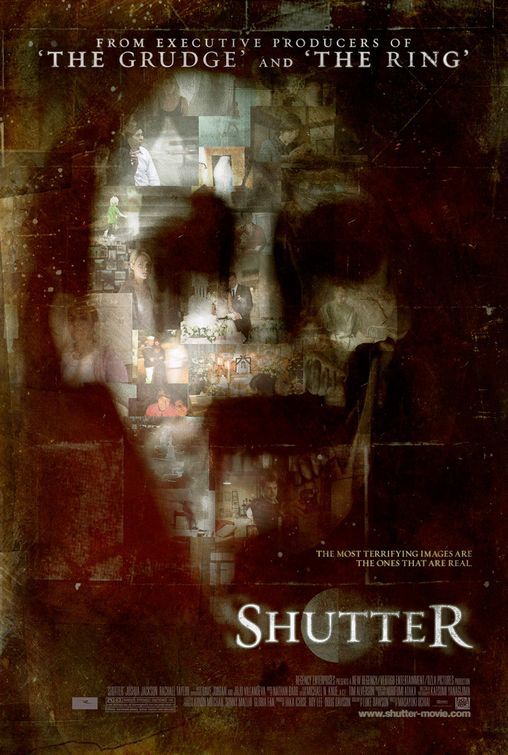
RetView #52 – Shutter (2008)

Title: Shutter

Year of Release: 2008

Director: Masayuki Ochiai

Length: 83 mins

Starring: Joshua Jackson, Rachael Taylor, Megumi Okina, David Denman, John Hensley, Maya Hazen

“From the executive producers of THE GRUDGE and THE RING,” the poster screams, in reference to Takashige Ichese and Roy Lee, who were indeed responsible for at least the US remakes of those movies (only Ichese was involved in the Japanese originals). And it shows. This film, a remake of a 2004 Japanese/Thai movie of the same name was just a little too eager to jump on the A-Horror bandwagon which was then running out of control and really could have gone awfully wrong. But it didn’t. Instead, despite some early mixed reviews, the US version of Shutter was a huge commercial success, grossing almost $48 million from a measly $8 million budget. That’s some achievement. And the numbers are justified. Though derivative at times, like a lot of Asian horror movies tend to be, Shutter is a truly exceptional piece of work.

Newlyweds Ben (Jackson) and Jane Shaw (Taylor) leave New York and head for a new life in Japan. Ben, a photographer, has lived there before. While driving through the countryside, Jane runs over a girl standing in the middle of the road and crashes their car into a tree. However, when they come to their senses and go looking for the body they find nothing, not so much as a drop of blood. After the emergency services come and clean up the mess, they try their best to put the whole sorry episode behind them. But from then on, all the pictures the couple take are ruined by some weird white mist. Ben’s assistant Seiko (Hazen) identifies the photographs as examples of spirit photography and introduces Jane to her ex-boyfriend who works on a spooky magazine. It turns out the paranormal is big in Japan. Who knew?

From there, things deteriorate further for the couple. The white mist begins to morph into what looks like a ghostly figure, Jane suffers nightmares, and Ben experiences physical pain in his shoulder, which he attributes to the car crash, that makes him a virtual hunchback. Both feel the ominous sensation of being stalked. Matters come to a head when Jane has a close encounter with the ghost. There are many kinds of supernatural entities in Japanese mythology and folklore, which we in the West group together as ‘ghosts’ for our convenience. This particular kind of ‘ghost,’ which has died a violent death or is motivated by revenge or sorrow, is known as Yurei. Jane learns that the yurei’s name was Megumi Tanaka (Okina). Furthermore, as with a lot of married couples, it turns out Ben and Jane have a few secrets from one another. Ben knew Megumi from when he worked in Japan. Intimately. When confronted, Ben admits being in a relationship with her but claims he broke it off when Megumi became too clingy, doing a runner with the help of his ex-pat friends Adam (Hensley) and Bruno (Denman). In despair, Migumi commits suicide. Hence the rather pissed-off yurei. She first targets Adam and Bruno, for reasons which become crystal clear later on, then goes after Ben and Jane who run back to New York. Little do they know, their nightmare isn’t over and the small matter of 6,500 miles isn’t going to put a damper on Migumi’s pity party. There’s one more sting in the tail. Several, actually. And at the very end, we see the real cause of that phantom pain in Ben’s shoulder. That scene alone cements Shutter’s place in the RetView series.

Shutter packs a lot into its 83 mins (90 mins unrated cut) running time. True, it features many of the classic triggers and tropes we’ve come to expect from Asian (and in particular, Japanese) horror movies; unrequited love, revenge, folklore, technology gone bad, and wraps them all together in a slick little bundle ripe to be consumed by Western audiences. It works. I think the reason Shutter was no negatively received by critics is the fact that it came so soon after Hollywood remakes of The Ring, The Grudge, Dark Water, Pulse and others. In 2008 alone, Shutter arrived arm-in-arm with a slew of comparable efforts such as The Eye, Mirrors, The Echo and One Missed Call. By then, the backlash was beginning, and Shutter perhaps fell victim to that. In the cold light of day (or even better, in the dead of night) Shutter is essential viewing.

By the way, if you’re a fan of the genre you might like to check out what happened during my J-Horror movie marathon.

Trivia Corner:

Shutter does a great job of picking up actors better known for their comic ability and brought them kicking and screaming over to the dark side. Joshua Jackson made his name as Charlie Conway in the Mighty Ducks trilogy, while David Denman is best known for playing Roy Anderson, Pam Beesly’s fiancé (before she got together with Jim Halpert) in the US version of The Office.


RetView #50 – Jaws (1975)

Title: Jaws

Year of Release: 1975

Director: Steven Spielberg

Length: 124 mins

Starring: Roy Scheider, Richard Dreyfuss, Robert Shaw, Murray Hamilton, Lorraine Gary

I wanted to do something a bit special for this landmark 50th RetView, and you could probably count on your fingers the number of movies, of any genre, that have had more of a cultural impact than Jaws. In fact, these days it is widely considered one of the best films ever made. It was based on the novel of the same name Peter Benchley was commissioned to write by Doubleday in the early seventies, though rumour has it that he was ejected from the film set for making a nuisance of himself. To date, the movie has spawned three sequels despite declining popularity and commercial performance, the franchise reaching its nadir in 1987 with Jaws: The Revenge which, conversely, is generally acknowledged as one of the WORST movies of all time. The Jaws franchise is a prime example of how to go from hero to zero in four easy steps. It’s probably fair to say that by 1987, the killer shark premise was beginning to wear a little thin. They probably did well to take it as far as they did. But while the series ended badly, upon its release in the summer of 1975 the original movie was nothing short of a revelation, terrifying beach-goers everywhere, raking in an astonishing $470 million at the Box Office from a $9 million budget, and going on to win no fewer than three Academy Awards, making it one of Universal’s biggest ever triumphs. All things considered, it’s well worth a closer look.

If, by some miracle, you’re unfamiliar with the plot, it’s pretty easy to swallow (sorry). When a giant man-eating Great White shark starts terrorizing a nondescript New England town called Amity, threatening not only swimmers but local businesses much to the chagrin of the local mayor (Hamilton), police chief Martin Brody (Scheider) is called into action. After getting slapped in the face and shouted at several times by affected locals, he eventually enrols a grizzled professional shark hunter called Quint (brilliantly portrayed by Shaw) and a witty marine biologist (a pre-Close Encounters of the Third Kind Dreyfuss) and together the trio head off into the open sea on Quint’s too-small boat called the Orca (named after the only natural enemy of the Great White) to hunt down the pesky fish. Incidentally, if you didn’t get the reference, “We’re gonna need a bigger boat,” is a classic line from the movie delivered by Brody upon seeing the size of the shark they were dealing with and has been ‘meme famous’ ever since. Screenwriter Carl Gottlieb later revealed that the line wasn’t scripted, but ad-libbed by Scheider.

The musical score, which went on to become a classic piece of music synonymous with impending doom, was composed by John Williams. Widely regarded as one of the greatest film composers of all time, Williams also wrote the music for Star Wars, Close Encounters of the Third Kind, the Indiana Jones films and, er, Home Alone. During his distinguished career he has won 25 Grammy Awards, five Academy Awards (including one for the Jaws theme) and four Golden Globes. Discussing the piece that kick-started his career, he described the Jaws theme as, “Grinding away at you, just as a shark would do. Instinctual, relentless, unstoppable.”

But it wasn’t all plain sailing. Jaws was the first major motion picture to be shot on the ocean, resulting in a troubled, prolonged shoot that far exceeded its budget. Among the issues the crew had to contend with were unpredictable weather, vessels drifting into shot, the effects of salt water corrosion on equipment, everyone getting seasick and problems with the life-sized mechanical sharks. There were so many problems the story goes that disgruntled crew members dubbed the film, “Flaws.”

So what made Jaws so popular? And why does it remain so?

In a nutshell, not only does it feature a great director, a solid plot, a memorable script, a brilliant cast, impressive special effects and an awesome soundtrack, but it appeals to our primal fears. People don’t belong in large bodies of water. We know this. The stuff living in there don’t like us and that particular environment is not conducive to having a good time. On re-watching the movie with a critical eye, it is noticeable how little screen time Spielberg actually gives the shark. This is testament to his unparalleled film-making skills and ability to ramp up the tension using only dialogue and, in one memorable scene, a drunken sing-a-long. Gottlieb would later reference the original 1951 version of The Thing, amongst other classics, where, “the suspense was built up because the creature was always off-camera.” This enabled the crew to concentrate on showing the ‘effects’ of the monster (or in this case, the shark) rather than the monster itself. Given the post-Watergate political landscape the movie was released into, it’s inevitable that critics drew certain conclusions. Perhaps overthinking things a bit, film critic Andrew Britton has suggested that narrative alterations from the book (Hooper’s survival, the shark’s explosive death) help make it “a communal exorcism, a ceremony for the restoration of ideological confidence,” and suggested that the experience of the film is “inconceivable” without the audience’s jubilation when the shark is annihilated, signifying the obliteration of evil itself. In his view, Brody serves to demonstrate that “Individual action by the one just man is still a viable source for social change.”

In perhaps the most serious bout of overthinking ever, Fredric Jameson went even further, highlighting the polysemy of the shark and the multiple ways in which it could be taken, from representing alien menaces such as communism or the Third World to more intimate concerns like the unreality of contemporary American life and the vain efforts to sanitize the concept of death. He asserts that its symbolic function is to be found in this very “polysemousness which is profoundly ideological, insofar as it allows essentially social and historical anxieties to be folded back into apparently ‘natural’ ones … to be recontained in what looks like a conflict with other forms of biological existence.”

‘Kay then.

Trivia Corner:

According to Spielberg, the prop arm used in the scene where Chrissie’s remains are found looked too fake. So instead, they buried a female crew member in the sand with only her arm exposed. Simple, yet effective.


Retview #44 – Predator (1987)

Title: Predator

Year of Release: 1987

Director: John McTiernan

Length: 107 mins

Starring: Arnold Schwarzenegger, Carl Weathers, Jesse Ventura, Bill Duke, Richard Chaves

The story goes that after Rocky IV came out, a joke circulated around Hollywood that since Sly Stallone had levelled all earthly opponents, he would have to fight an alien if a fifth film were to be made. In the event, he fought Tommy Morrison instead, but screenwriters Jim and John Thomas took some inspiration from the joke and wrote a screenplay around it. When the latest instalment in the franchise, unimaginatively called THE Predator, dropped in 2018, it did so to a chorus of disapproval and a slew of negative reviews. Much like the first instalment, which was labelled “Grisly and dull” by the New York Times. Ouch. Not to be outdone, the LA Times wrote that it was, “Arguably one of the emptiest, most derivative scripts ever made as a major studio movie.” Double ouch. Also like the first instalment THE Predator was still a… wait for it… monster hit. The main criticism of the franchise as a whole are the thin plots, papered over with explosions and witty one-liners. Therefore, you might be wondering why Predator merits inclusion in this series. Well, because it’s fucking brilliant. That’s why.

Admittedly the plot, what there is of one, is as weak as wet tissue paper. Dutch, a US Army Special Forces Major Dutch (Schwarzenegger) and his team, which includes Dillon (Weathers who, ironically, had just played Apollo Creed in Rocky IV), a former CIA agent who has a lot to hide, are charged with the task of rescuing an official being held hostage by some insurgents in some generic Central American setting. However, when they arrive they find a crashed helicopter and a bunch of skinned corpses, which kinda sets alarm bells rining. After a textbook firefight with some bad guys, the mission is revealed to be a set-up and Dillon’s deception is laid bare. But that’s just the start of their problems. Before they can make it to their extraction point, they realize that something in the jungle is stalking them. Yep, it’s the predator, a vicious, war-mongering alien entity with dreads that hunts people (and, apparently, other species of alien) for sport.

The first Predator movie not only laid the foundations for three sequels, but also a spin-off franchise (Alien v Predator) and a torrent of comics, novels, videogames, action figures and even theme park attractions creating a multi-billion dollar cottage industry. That’s something most movie franchises can only aspire to. Though they flatter to deceive at times and benefit from bigger budgets and better tech, the truth is none of the other entries in the Predator franchise ever reached the dizzy heights of the 1987 original. Arriving just as Schwarzenegger was riding high on show-stealing performances in the likes of Terminator, Commando and Raw Deal, Predator was very much a feather in his cap. He got to run around in the jungle with some mates covered in mud sporting unfeasibly large weapons and even larger biceps. What was not to like?

One thing I found interesting about Predator is the way it gives the alien interlopers some depth of character, whereas most movies of this type are content to just paint them as bad guys and be done with it. We even get a glimpse of their motivations. Granted, these motivations don’t amount to much, they hunt for ‘sport,’ but it’s a start. No doubt all the eighties bombast was a recipe for success, as Predator raked in almost $100 million at the Box Office against a modest $15 million budget. It also made a lasting impression, earning an 87% audience score on Rotten Tomatoes compared to a score of just 34% for the 2018 instalment, and as recently as 2015 it was named fourth in a Rolling Stone reader’s poll to ascertain the best action movies of all time. All of which is worthy acclaim.

GO HERE for more RetView entries.

Trivia Corner:

Action star Jean-Claude Van Damme was originally cast as the Predator, the idea being to match his martial arts skills with Schwarzenegger’s muscle, but he wasn’t happy being crammed into the suit all the time and constantly complained about it. The part eventually went to Kevin Peter Hall who stood over seven feet tall. He died of AIDS in 1991 at the age of just 35.


RetView #36 – The Blair Witch Project (1999)

Title: The Blair Witch Project

Year of Release: 1999

Director: Daniel Myrick & Eduardo Sanchez

Length: 81 minutes

Starring: Heather Donahue, Michael C. Williams, Joshua Leonard.


blair_witch_project_ver1

Unless you’ve been living under a rock for the past twenty-one years (yep, that long) you must have heard a lot about this month’s #RetView entry. Among other things, The Blair Witch Project has been labelled a cult classic and credited with both exposing the world to viral marketing and ushering in the now loved and equally-loathed Found Footage genre. Personally, I’m in the former camp. Like I’ve said before, I fucking love a good Found Footage flick. The whole point of this series is to watch old(ish) films through a new lens, to see how they (or other things) have changed. Sometimes it’s useful to have a whole new set of eyes to look through, too. The first time I saw this movie was with my then-girlfriend in Wales. The second time I saw this film, over two decades later, was with a different girlfriend in a different country, who knew very little about The Blair Witch Project and the impact it made. The effect was remarkable. While it was by no means the first movie to use the found footage technique, it was the first to expose the general public to what was then a largely experimental form.

You’re probably familiar with the premise. But in case you’re not, The Blair Witch Project tells the story of a trio of student film makers who head off into the woods to investigate a local legend. Smart move. It won’t surprise you to find out that they all disappeared, leaving behind their equipment. The footage in the movie, showing the spooky events leading up to the disappearances, was supposedly discovered a year later.

I don’t know how many people reading this can remember the pre-internet world. Probably not many. Before websites and social media platforms dominated our lives as they do now, us horror buffs got most of our news and information from magazines and newspapers. The internet was there, obviously, but still in its infancy and ripe to be exploited. When it was released in 1999, the world was feverishly prepping for the Y2K bug which would apparently wipe out life as we knew it. It was a weird time. In that paranoid, twitchy climate, The Blair Witch Project rode a wave of publicity based on the fact that at first, most people didn’t know if the footage used in the movie was actually real or not. Rumours and speculation, both online and in the press (fuelled by the fact that the actors all used their real names rather than those of characters adding yet more ambiguity and realism) were rife. Artisan, the company that bought the rights to the film, allegedly spread false rumours about the actors’ demise, and deliberately failed to quash online speculation. Just the thing that makes a marketing department smile. It was one of those rare moments in cinematic history where the planets align and a little indie film destined for obscurity goes global. In this case, raking in over $248 million from a budget of just $60,000 (some sources say the true figure was closer to $25,000) proving that miracles really do happen, even in Hollywood.

Truth be told, Myrick and Sanchez squeezed an awful lot out of that $60,000. The then-innovative shooting style meant that they could get away with a lot that would be noticeable in a conventional film, but this is still remarkable in its simplicity if nothing else. It was spliced together from 20 hours of raw footage taken over eight days in Maryland, and much of the dialogue was improvised on the spot. Rumour has it that they wanted have the Animals’ ‘We Gotta Get Out of this Place’ playing on the car stereo at the beginning, but had to veto the plan when they realized that they couldn’t afford the rights.

Even now, when you’re fully aware that most of the hype was just that, you can’t fail to be impressed. The acting is superb and there are some genuinely jumpy moments. Just for the record my second viewing companion, who was completely oblivious to all the hype, agreed. I tried convincing her the footage was authentic, and she almost believed me for a while. But people who grew up with the internet are much more savvy and less easily fooled. Regardless, The Blair Witch Project is a modern classic. If you’ve already seen it, I urge you to watch it again. Preferably with someone who hasn’t. And if you haven’t seen it, what are you waiting for? Go discover the legend.

blair witch flag

Trivia Corner:

In one notorious scene, the teeth Amanda who, incidentally, is now a medicinal marijuana grower, found in the twigs were actual human teeth, supplied by Eduardo Sanchez’s dentist, and the hair belongs to Josh.


Design a site like this with WordPress.com
Get started